
This blog post is part 2 of a series on Autism and the increase in the number of children who have been diagnosed as having Autism. But what about the speculative diagnoses of famous people with autism? Is this helpful? Harmful? Read to learn more. If you have not yet read part 1, click here to read it before continuing with part 2.
Social media has recently seen a rise in lists of celebrities and historical figures who are speculatively diagnosed as autistic. These “Speculative Diagnoses” include names like Albert Einstein, Emily Dickinson, Elon Musk (his own speculative diagnosis), Vincent van Gogh, Marie Curie, Wolfgang Mozart, and Ludwig van Beethoven. But what do we really gain—or risk—by labeling people who never received a diagnosis in their lifetime? Let’s explore a few notable examples and the implications of this trend.
Just a side note: Although not mentioned throughout the blog, this article brushes on the topic of “neurodivergence”, where everyone seems to have autism.
Was Steve Jobs One of the Famous People with Autism? A Closer Look
 First, let’s take a look at another name that shows up in these Speculative Diagnosis lists who has had a profound impact on every single one of us: Steve Jobs.
Steve Jobs possessed these autistic-like traits that prompted people to give him a Speculative Diagnosis:
- Extreme focus on detail and perfection: His concentrated focus on detail helped make the Apple products best sellers. Why is extreme focus even pathologized as a negative trait? He knew his mission and goals and he was focused on them. Why is this even considered an autism trait? Does it make it look like there are more ADHD cases than there really are?
- Social difficulty (described by many who worked with him). Interpersonal relationships were difficult for him and by most accounts, he was not a very good parent.
- Sensory sensitivities (he was famously very particular about textures, lighting, and aesthetics). This trait made Apple products top of the list.
- Rigid routines or thinking. Yes, he had rigidity. Again, this made Apple products the first and best products on the market. He was a visionary. He had a clear vision and was determined to see it through—an attribute common to many successful innovators, autistic or not. There are many rigid people in the world who don’t have autism. You can probably think of a few.
- Low tolerance for small talk or emotional nuance. This trait of disliking small talk is pretty common. Why is enjoying or disliking small talk considered anything more than a personality trait? Maybe he simply saw it as a waste of time and caused delays in reaching his goals. He certainly knew how to address a crowd though. And his writings and speeches contained emotion.
But having traits that resemble autism isn’t the same as those traits being pathological and it most certainly isn’t the same as needing support, which is what the diagnostic support levels of autism (1-3) are based on. (These levels help determine the amount of assistance an individual may need in social communication and managing repetitive behaviors.) Jobs clearly functioned at an extremely high level in life and business. If he had autism (which we don’t know), he likely developed coping strategies that masked or managed those traits.
There’s no evidence Steve Jobs ever needed the kind of social, executive functioning, or sensory support that would qualify him for a formal diagnosis—especially one that requires documentation of impaired daily functioning. We do not need to pathologize his traits.
Why Are Famous People Speculatively Diagnosed with Autism?
So why are figures like Steve Jobs included in these speculative lists? Here are a few common motivations behind this trend:
- Representation and Connection: Many people want to see themselves reflected in someone successful. If you’re autistic and see a bit of yourself in Steve Jobs, that can feel incredibly validating. I get it.
- Making Sense of Genius or Eccentricity: We often look for explanations when someone is extraordinary, especially if they don’t follow social norms. (See Speculative Label for Mozart, below ⬇️) Speculative diagnoses can serve as shorthand for “they were different, and that’s why they were brilliant.” Personally, I don’t feel the need to make sense of genius. I can just appreciate it.
- Awareness-Raising: Some people use speculative diagnoses to spotlight what autism traits might look like in the real world or to challenge stereotypes—e.g., “Autistic people can be leaders, artists, or visionaries too.” The real question is whether Level 1 and Level 3 people should have the same diagnosis.
- Normalizing Autism: If you have watched the press conference with RFK Jr., you will recognize his phrase he used many times: “epidemic denial”. This is what happens when people speculatively diagnose autism in well known people. It makes it look like it has been around all the time, but we all just didn’t know it. (Please refer to part 1 in this Blog Post series for more context.) I encourage you to watch this press conference. He had a researcher explain why this isn’t a matter of better recognition and diagnosis. In fact, it is suggested that people can diagnose it better because there are so many cases of it. He shares base line studies of number of children with autism and compares them to today’s numbers: 1 in 31 children!!!Here is the link to that press conference: https://www.youtube.com/live/AG-zkALlAsU?si=zOde2ovIZ1xVS6TK&t=2504
⚠️ The Risk of Labeling Famous People with Autism—Without Evidence
Here’s where it gets sticky.
❌ It can pathologize difference. Saying someone must have autism because they were socially awkward or displayed a high level of intensity risks turning natural personality variations into something that needs to be explained away or labeled.
❌ It ignores context and privilege. Someone like Steve Jobs could demand things, melt down in meetings, or avoid social niceties without consequence—because he had power. A barista or teacher or a customer in a store with the same traits might be seen as “difficult” or “unfit” instead of “brilliant.”
❌ It erases lived experiences. Autistic people who need real support often struggle to get it. Seeing high-powered, wealthy, undiagnosed individuals cited as examples can feel invalidating or minimize what daily challenges look like for many people on the spectrum. This is especially true for those needing Level 3 Support.
❌ It’s a privacy and consent issue. Even when someone is deceased, assigning them a diagnosis without their input raises ethical concerns. And when someone is still alive and hasn’t disclosed anything themselves? That’s even more problematic.
Speculative Autism Diagnoses on 18th Century Musicians
In spite of the drawbacks I mentioned above, these Speculative Diagnoses are interesting in light of the earlier discussion on Autism and Toxins.
🎻 The Eccentric Genius: Mozart’s Traits
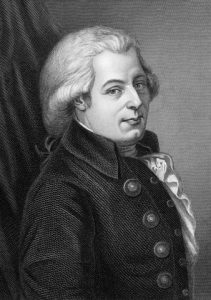 Wolfgang Amadeus Mozart, the 18th-century composer, was indeed an eccentric genius—and his life, with its brilliant music and very tumultuous personal history, lends itself to all kinds of retrospective analysis. But was he one of the famous people with Autism? For more background on Mozart, search for the multi-Oscar winning movie Amadeus and see where it is streaming.
Some of the Mozart’s traits that fuel the speculative diagnosis of autism include:
- Unusual Social Behavior: Mozart was known for his awkward social behavior and his difficulty with authority, especially as a child prodigy. He had a famously difficult relationship with his father, Leopold, who was both a strict teacher and manager of his son’s career. (We all know how that goes with modern day stars. It probably wasn’t any better back then.) His behavior toward others was often seen as inappropriate or emotionally distant, which could align with some of the social and communication difficulties seen in autism.
- Obsessive Focus and Detail: Mozart was incredibly focused on his music, often obsessively composing at a fast pace. He would work on compositions until they were complete and showed an extraordinary ability to intuitively understand and manipulate music theory—which, in the context of autism, could be seen as an example of his narrow, intense focus on specific interests or talents. I think there are many modern day musicians who are intuitively musical.
- Sensory Sensitivities: There’s also evidence that Mozart had sensory sensitivities. It’s reported that he was very particular about things like the quality of the music played in his presence, the people he associated with, and even the food he consumed. Some of these behaviors might be linked to the sensory processing differences that are often a feature of autism. Or, they could be classified as Mozart possessing a little snobbishness, which develops sometimes with fame.
- Unusual or Repetitive Patterns: Mozart had a quirky sense of humor and often engaged in inappropriate or socially uncomfortable behaviors in his letters. For example, he wrote some off-color jokes to his family, using humor that some found childish or offensive. This could be interpreted as an example of social communication difficulties (a common feature in autism), though it could also just reflect the irreverent personality of a 18th-century genius. One also needs to recognize that his father was very controlling and is off color jokes and inappropriate behavior could simply have been a way to feel more “free”. The standards of politeness were stricter, especially in public and aristocratic circles, so anything outside of that was much more likely to be scrutinized, even if it was just playful in nature. It is interesting to note that homeopathic Mercury is included in the symptom Jesting. (See Discussion on Beethoven below for more context.)
- The Genius Factor: Some people believe that autism’s high-functioning traits (like hyper-focus and attention to detail) could explain Mozart’s extraordinary musical genius. The idea that eccentric geniuses must have something unusual about their brain wiring has fueled this narrative in popular media.
Health Issues and Other Factors
Mozart’s health problems are another piece of the puzzle in why some speculate about autism. He suffered from various illnesses throughout his life. Some historians have described his illnesses as “mysterious.”
- Early death: Mozart died at the young age of 35, and the cause of his death has been debated. Some suggest he may have suffered from an autoimmune disorder, kidney disease, or even streptococcal infections (which can cause issues like rheumatic fever). There’s also some speculation that he could have had autoimmune-related encephalitis, which could explain some of his eccentricities and behavior. Encephalitis is common in what would now be called Support Level 3 autism. It often shows up as self-harm, such as head banging. (We will discuss autoimmune disorders in a later blog post.)
- Behavioral symptoms: In addition to the possible health conditions, people have noted that recurrent illnesses and fever could have impacted his behavior and health in a way that mimicked traits of autism. However, it’s important to note that there’s no solid historical evidence to directly link his medical issues with autism. I recall reading an article at least 15 years ago, where increased Life Span in humans (this is different than life expectancy—it refers to how long humans have the capacity to live) has been attributed more to plumbers than to medicine. In Mozart’s time, hygiene was not considered as important, nor as easy as it is now. So his early death and other recurrent illnesses and fevers could possibly be attributed to poor hygiene that was common during his lifetime.
Final Thoughts on Mozart
The speculation that Mozart was on the autism spectrum is part of a broader trend of trying to explain eccentric behavior through the lens of modern diagnoses. However, we should be careful not to romanticize or oversimplify what autism means. For all his eccentricities and genius, it’s entirely possible that Mozart was simply different in ways that were valued by the world of his time—without needing a diagnosis or a label.
Was Ludwig van Beethoven One of the Famous People With Autism?
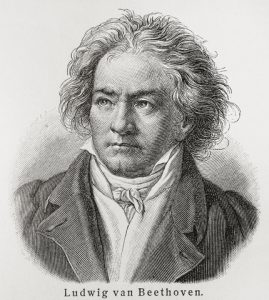 Beethoven, who lived in the late 18th and early 19th centuries, is frequently thought to have had traits that align with autism, especially when you consider his eccentricities, intense focus, and challenges with social relationships.
Autism-Related Traits in Beethoven
- Social Difficulties: Beethoven was known to be extremely solitary and could be difficult to engage with socially. He had a strained relationship with many people in his life, including his family and patrons. His difficulty with communication—he was sometimes blunt and abrasive—could be interpreted as social anxiety or autism-related challenges. Or it could just be his personality.
- Sensitivity to Sound: Given that Beethoven became deaf later in life, it’s interesting to note his early sensitivity to sound. Some speculate that this heightened sensitivity to sensory stimuli might point toward sensory processing issues, which are often part of the autism spectrum. It could also be a contribution to his musical genius, and not pathological at all.
- Mercury Exposure: Beethoven was reportedly treated with mercury for health issues, (not uncommon in the day—and such treatment was a motivation for Dr. Samuel Hahnemann to develop the principals of Homeopathy). Mercury poisoning can have a variety of neurological effects, including mood swings, irritability, cognitive dysfunction, deafness, and physical tremors. Many of these symptoms overlap with behaviors attributed to autism, like rigidity and difficulty with social interactions.Interestingly, the symptom picture for Homeopathic Mercury includes such autism traits as Compulsive Disorder, Mental Rigidity, Injuring Oneself, Aversion to Company, Desires Solitude, Active Concentration.
- Intense Focus and Repetitive Behavior: Beethoven’s obsessive focus on his music—composing even while deaf—could be seen as a form of special interest (a hallmark trait in many on the autism spectrum). In my experience as a homeopath and a citizen of the world, has taught me that many people wish they had a special interest, something they could really get into. He was also highly ritualistic in his daily routines, often working in specific ways, which might reflect the need for routine common among those with autism. It could also mean that it is a coping mechanism for any number of things, such as forgetfulness.
Final Thoughts on Beethoven
The combination of Beethoven’s intense focus, sensory sensitivities, social isolation, and possible mercury poisoning leads some to speculate that he may have had autism. However, it’s just that—speculation, as there is no definitive evidence of autism.
Why Label Historical Famous People as having Autism?
When I took training for working with individuals with Autism, the instructor suggested that we all have some autism traits. We were even asked to identify some of our own.
The issue with labeling people based on traits (none of us in the course were diagnosed with Autism), especially when those traits are associated with autism, is that it can be oversimplifying and limiting. The diagnostic categories are designed to identify patterns of behavior that indicate a neurological condition, but the more we look at human behavior through that lens, the more we begin to label every personality quirk or individual trait as something that needs to fit into a box. That becomes problematic when we pathologize things that may not need to be pathologized.
For example, needing to go for a walk to think—like Albert Einstein did (also commonly a subject of Speculative Diagnosis)—can simply be a way of managing stress or giving the brain a break to process. It’s a very human behavior that’s not necessarily tied to any condition like autism. Many people, especially those with a lot of mental or emotional processing to do, have developed ways to cope that involve physical movement, solitude, or simply taking breaks. It doesn’t make them autistic; it makes them human.
But when the autism label is applied to people who have a few traits in common with those on the spectrum (like intense focus, social awkwardness, or need for routine), there’s a risk of blurring the line between genuinely autistic traits (which come with a full spectrum of challenges and differences) and simple personality quirks that a lot of people experience.
The temptation to view history through the lens of modern diagnosis is understandable—but we must tread carefully. While some traits displayed by Mozart, Jobs, or others may overlap with characteristics associated with autism, retrospective diagnosis risks distorting the picture. Not every eccentricity, brilliance, or social quirk needs a label. Perhaps the most respectful approach is to appreciate everyone’s uniqueness without assuming we understand the internal workings of their minds.
What To Do If You Have A Child With Autism
Homeopathy is well known in the autism world as a modality that can help your child recover. If you would like to see improvements in those traits associated with Autism, lets discuss it. Schedule a Discovery Call by clicking on the Book Now button here.
If you missed part 1 of this series, click here to read it.

 Some of you know me, others of you may have heard of me. And for most, you probably have no clue about me or my business. So I wanted to take a few minutes to introduce myself, my family, my business, why I am a homeopath and how I became a homeopath—not necessarily in that order.